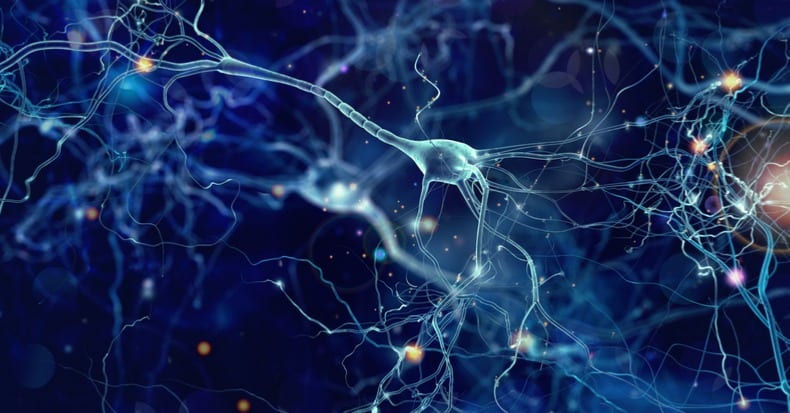

Every movement, smell, taste, touch, sound, thought, and dream has its origin in the nervous system.
Every function of your body—both voluntary and involuntary—is controlled, at least in part, by your nervous system.
To better understand how the nervous system works, it helps to first understand what makes it up.
The nervous system is made up of two primary systems:
- the central nervous system (CNS)
- the peripheral nervous system (PNS)
The CNS consists of the brain and spinal cord. The PNS is made up of the nerves in the arms, legs, torso, and other areas of the body that carry information to and from the CNS.
Many functions of the PNS are voluntary. These include actions such as reaching for a plate, swinging a golf club, walking, or swimming.
Other functions are involuntary, such as the beating of the heart, breathing, digestion, blood sugar regulation, metabolism, and countless other automatic functions that occur every day without us even thinking about them.
Many of these automatic functions are controlled by a subdivision of the PNS called the autonomic nervous system (ANS), which includes two components:
- the sympathetic nervous system
- the parasympathetic nervous system
The sympathetic nervous system is responsible for the familiar “fight-or-flight” response. Its activity increases during times of stress.
The parasympathetic nervous system does the opposite. It is commonly described as the “rest-and-digest” system. For example, when stress increases your heart rate, the parasympathetic nervous system works to slow it back down.
From a practical standpoint, think of the nervous system as a highway system carrying information throughout the body.
Sensory nerves carry information toward the brain and spinal cord. Motor nerves carry instructions back out to the muscles and organs.
For example, imagine touching a hot stove. Sensory nerves instantly send a message to the brain and spinal cord. Interneurons connect the sensory nerves to the motor nerves, and within a fraction of a second your hand pulls away.
Under a microscope, the connection between two nerves is called a synapse. This is where chemicals called neurotransmitters help carry information from one nerve to the next.
You can think of neurotransmitters like ferry boats carrying cars across a river. The “car” is the nerve signal. The “ferry” is the neurotransmitter that carries it across the gap.
Different neurotransmitters create different effects. Some excite the nervous system, while others calm it down. Neurotransmitters such as serotonin play an important role in mood, sleep, and mental health. This is why many medications used for depression, anxiety, bipolar disorder, and other conditions work by affecting these chemicals.
As you can see, the nervous system is incredibly complex, yet remarkably balanced.
Many things can interfere with that balance, including:
- trauma or injury
- lack of sleep
- chronic stress
- poor diet
- alcohol or drug abuse
Chiropractic focuses significant attention on improving nervous system function through spinal manipulation and related care. Because the spine surrounds and protects the spinal cord, improving spinal movement and alignment may influence both local and more distant functions in the body.
Managing sleep, stress, exercise, diet, and overall lifestyle also plays an important role in keeping the nervous system healthy.
Much of this information was obtained from the following URL:
https://en.wikipedia.org/wiki/Nervous_system#Nervous_system_in_humans
This article includes illustrations of the CNS and PNS and provides additional detail about how the nervous system works.